Foosball Scoreboard / Case study
I built a digital scorekeeper for my foosball table.
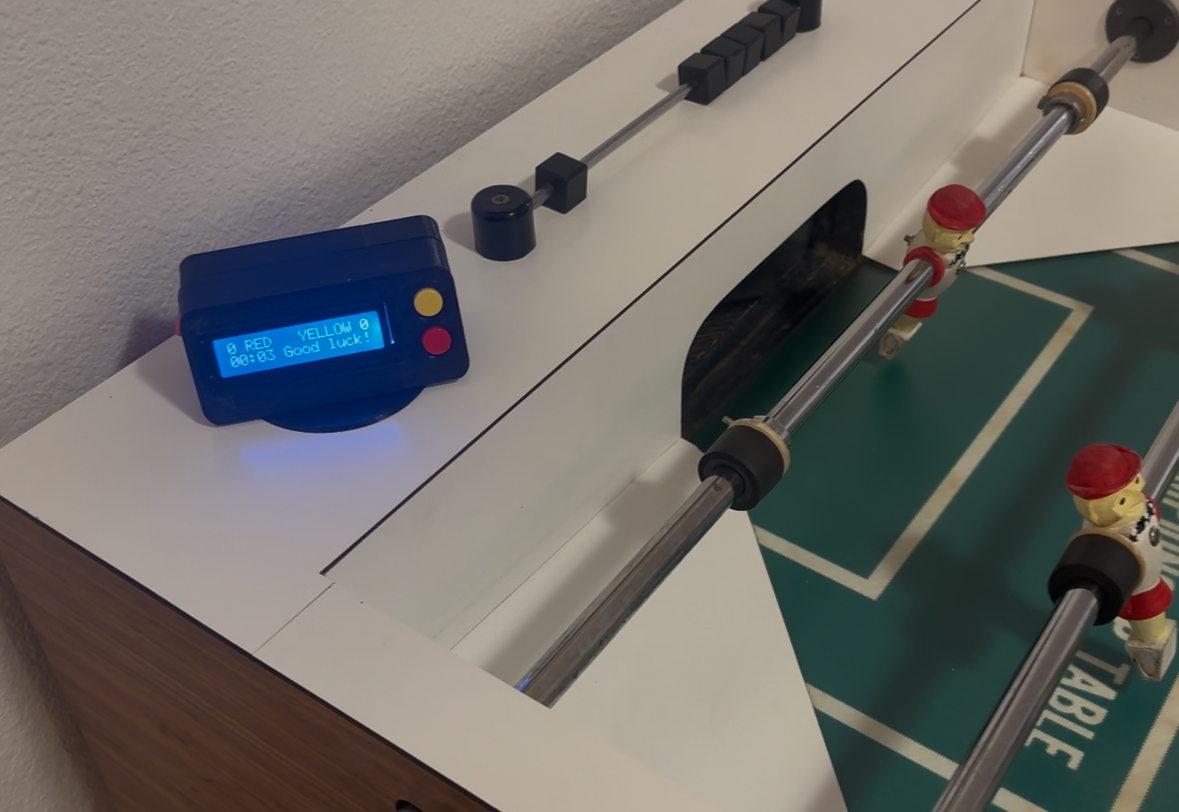
I designed and assembled an electronic foosball scoreboard around a microcontroller, character LCD, player controls, and a custom 3D-printed enclosure. I took it from a wired bench prototype to a device installed beside my table.
What I wanted
I wanted to keep score without stopping the game.
I needed the scoreboard within reach, readable from the table, and sturdy enough for repeated button presses. I also wanted it to look like part of the table instead of a pile of loose electronics.
How I built it
I prototyped the parts I was least sure about first.
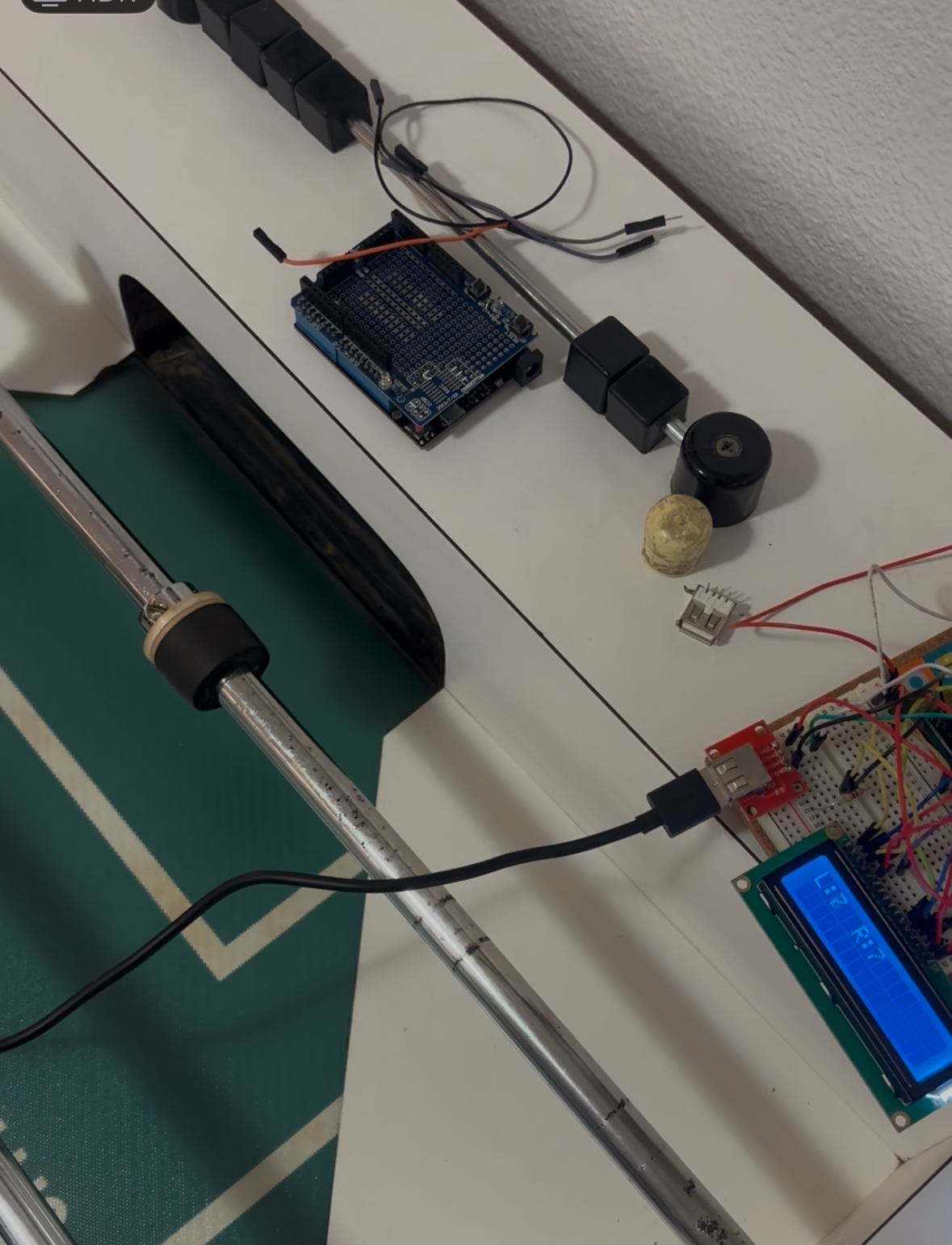
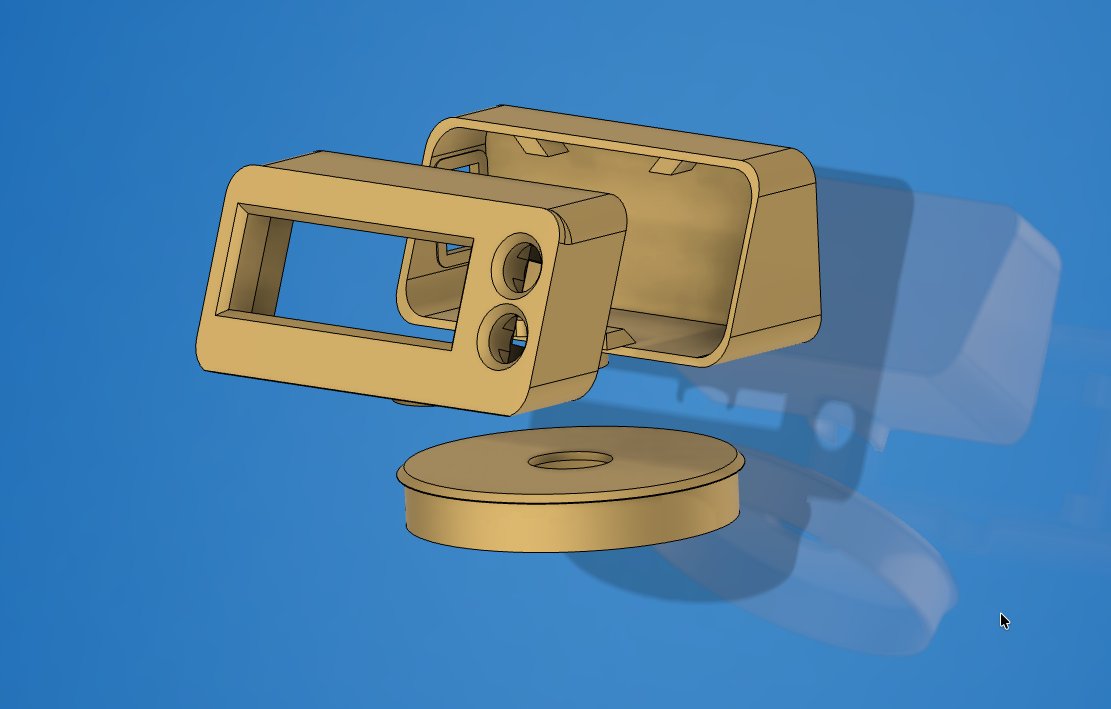
I kept the electronics exposed at first so I could change the display wiring, buttons, and scoring behavior quickly. After the control layout worked, I modeled the display opening, two front buttons, the shell, and a circular mounting base.
How I assembled it
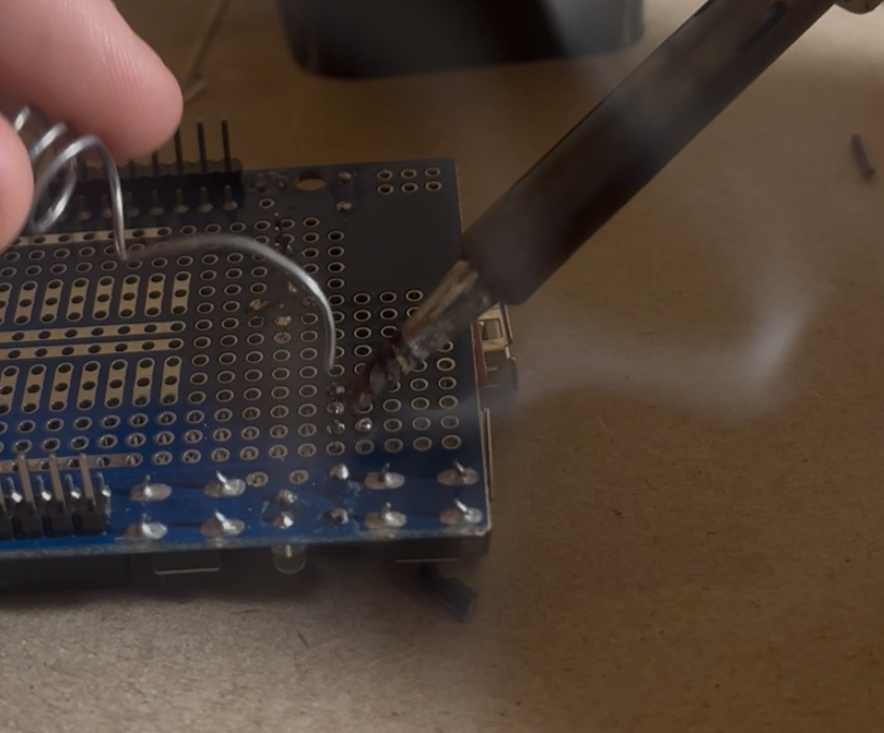
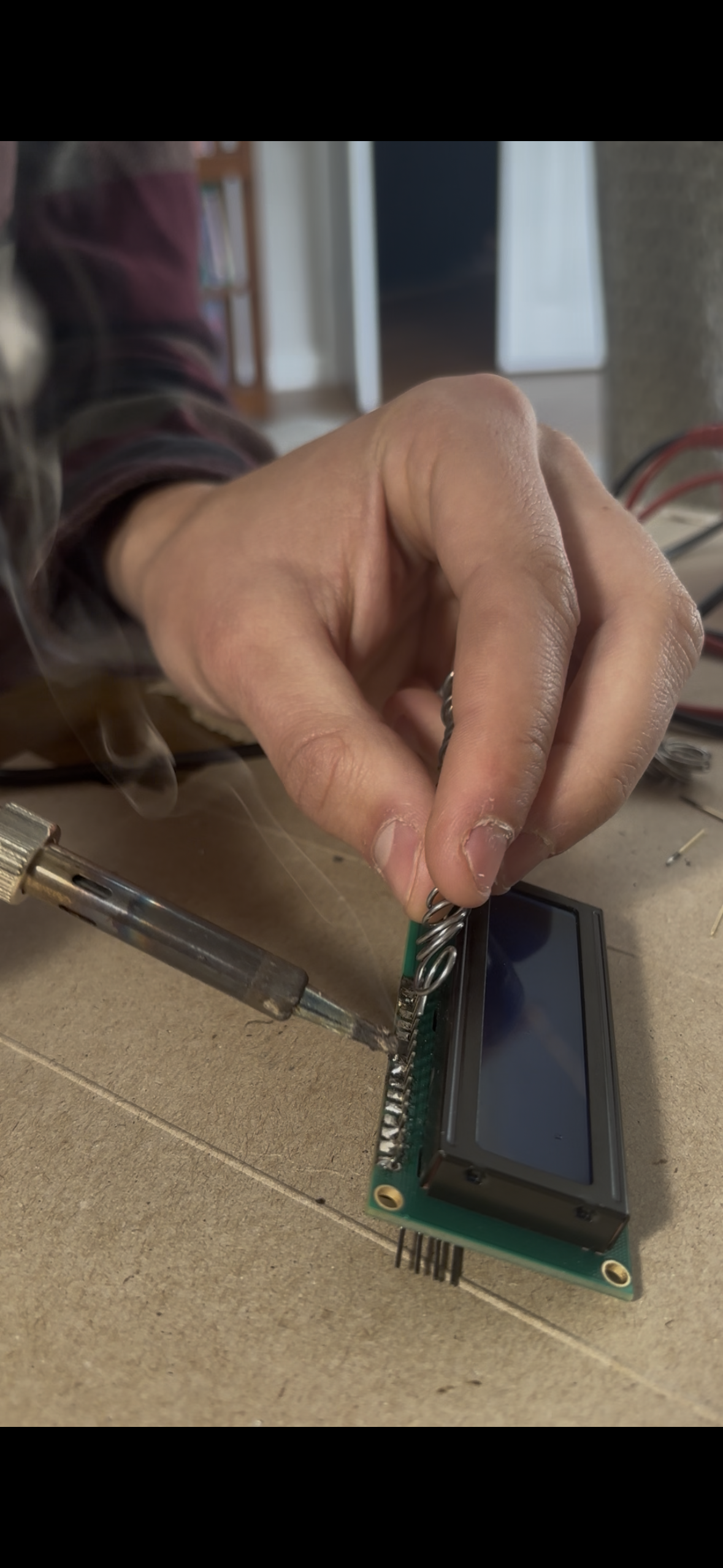
I moved from the breadboard to soldered connections once the circuit worked. Then I adjusted the enclosure around the real component depth, cable bends, power access, button travel, and viewing angle.
What I learned
I learned that hardware makes every design decision physical.
- I design for assembly, not only appearance. Clearance and cable access decide whether my CAD model is actually usable.
- I test the electronics before locking the geometry. I can move a breadboard wire much faster than I can reprint an enclosure.
- I think about repairs. The finished device needs to handle movement and still open again.
- I need better documentation next time. I want to add my schematic, parts list, firmware, scoring states, and power measurements.